
ABOUT THIS EPISODE
Farm as Community: Growing Belonging with Abel Pearson and Morag Gamble
When I first walked down through the fields at Glasbren with Abel last year, I had that feeling of arriving somewhere that is already alive with story and what a spectacular setting – the edge of the far is cliff that drops away to where the Taf and Tywi rivers meet the sea.
This is the landscape Abel grew up in. As he says in our conversation, the castle, the beach, the estuary and the small farms of west Wales were the backdrop to his childhood. He moved there at nine, learned Welsh in a first language primary school and watched his parents gradually find their way into farming. Cattle, vegetables and woodlands became part of his teenage years.
Later, WWOOFing took him around the world – from straw bale boot house in Aotearoa to sixty thousand acre sheep stations and a Dharma based land project in the Catalan Pyrenees. Natural building was his first doorway in.
“I realised I could actually build my own house,” he tells me. “I did not have to be a trained builder.”
Through natural building he stumbled on permaculture, and then everything shifted.
“Permaculture really is my origin,” Abel says. “Everything that my life is now has come from permaculture.”
Permaculture as a way of seeing
We talk about permaculture a lot on this podcast. I appreciated Abel’s insistence that, while we often focus on techniques, something more subtle is needed.
“So much of the conversation is about the practical implementation,” he reflects, “but a lot of that, especially in terms of food growing, is indigenous systems we are trying to rediscover.”
What has to underpin any technique, he says, is a shift in how we relate.
“That is the beauty of permaculture. It is a way of seeing, a guiding framework.”
From his environmental history studies, Abel came to understand how deeply landscapes have been shaped by the nature of our relationship with them – and what happens when cultures lose “an indigenous relationship, or a kinship, or an interbeing with the land”.
He points to ancient food systems – many of them now damaged or erased – as “incredibly permacultural food systems that integrate ecological regeneration with social good and feeding people.” These systems evolved over many generations, each adding to the design.
For Abel, the work now is not only sharing how tos but “giving people the opportunity to rediscover a sense of connection, kinship and listening to the land.”
From three acres to 134: the move to Lord’s Park Farm
Glasbren began as a three acre, on contour, permanent market garden on the land where Abel grew up. It was a bio intensive, perennial rich CSA garden that fed local households and hosted volunteers and community events.
Through the pandemic, the team leant hard into the permaculture ethics: earth care in their soil building and water harvesting, people care through weekly veg shares and volunteer days, and fair share through their efforts to keep food accessible when shelves were empty and incomes disappeared overnight.
At the same time, Abel and his board felt a growing sense that the project needed more space and a longer horizon.
When a National Trust farm near the southern edge of their CSA catchment came up for discussion, Abel went along to a village meeting. The Trust shared a new nature people climate vision for Lord’s Park Farm.
“I could absolutely see the Glasbren blueprint planted onto that vision,” he remembers.
Two years later, in the middle of a dry spell, he found himself watering crops morning and night, nursing a broken rib and spending his days writing a very ambitious tender application.
They were one of thirty seven applicants, many from around the world. Abel is honest that, on paper, they were not the strongest candidate financially. What they leaned on instead was community.
“We applied on the strength of our experience, our networks in the area, our community support,” he says, “and this carefully thought out, long term regenerative vision for the place.”
On his birthday, they learned they had been successful.
He remembers crying with relief and gratitude.
Designing a community facing farm
Lord’s Park is a 134 acre National Trust farm on the cliffs above Carmarthen Bay. It includes hay meadows, permanent pasture, woodland, coastal scrub and a cluster of traditional buildings.
Glasbren’s vision is to turn it into a highly diversified, people facing farm: an ecological market garden, orchards and agroforestry, mob grazed cattle, heritage grains and forest gardens, community spaces, a feast hall, a farm shop, educational programs and retreats.
Permaculture design is at work not only in the layout of beds, ponds and tree planting, but in the organisational and social design.
Abel describes the volunteer days that have run every Thursday for six years, now expanding into conservation, carpentry and event preparation alongside veg growing. He talks about their “no duress” culture, where you are valued for who you are, not only for how much work you can do.
It is a place where people come to learn skills, find belonging, improve their mental health, get their hands in the soil – and take home good food.
“Farming is a really great way to be doing that work of belonging every day,” he says. “You are in daily practice with the land you live on.”
Being of a place
One of the threads I found especially powerful in this conversation is Abel’s exploration of belonging.
He acknowledges the importance of Welsh language and identity – and the grief of never being a first language speaker – and also recognises that many people who find their way to Glasbren have no ancestral connection with Wales.
What does belonging look like then?
He offers a beautiful reframing: being of a place rather than from a place. Maybe your belonging is not to a whole country or even a whole valley, but to a particular farm, a particular acre, a particular square metre you visit every day.
Through practice, through service, through food growing and community, you can grow into that belonging.
Towards community scale permaculture everywhere
Abel’s story speaks so strongly to why I keep pouring my energy into permaculture education. When we learn to see the world through these ethics and principles, we can imagine and then create projects like Glasbren wherever we are.
Community supported farms, school gardens, neighbourhood food forests, city farms, land based learning hubs – all of these can become sites of ecological restoration and cultural repair.
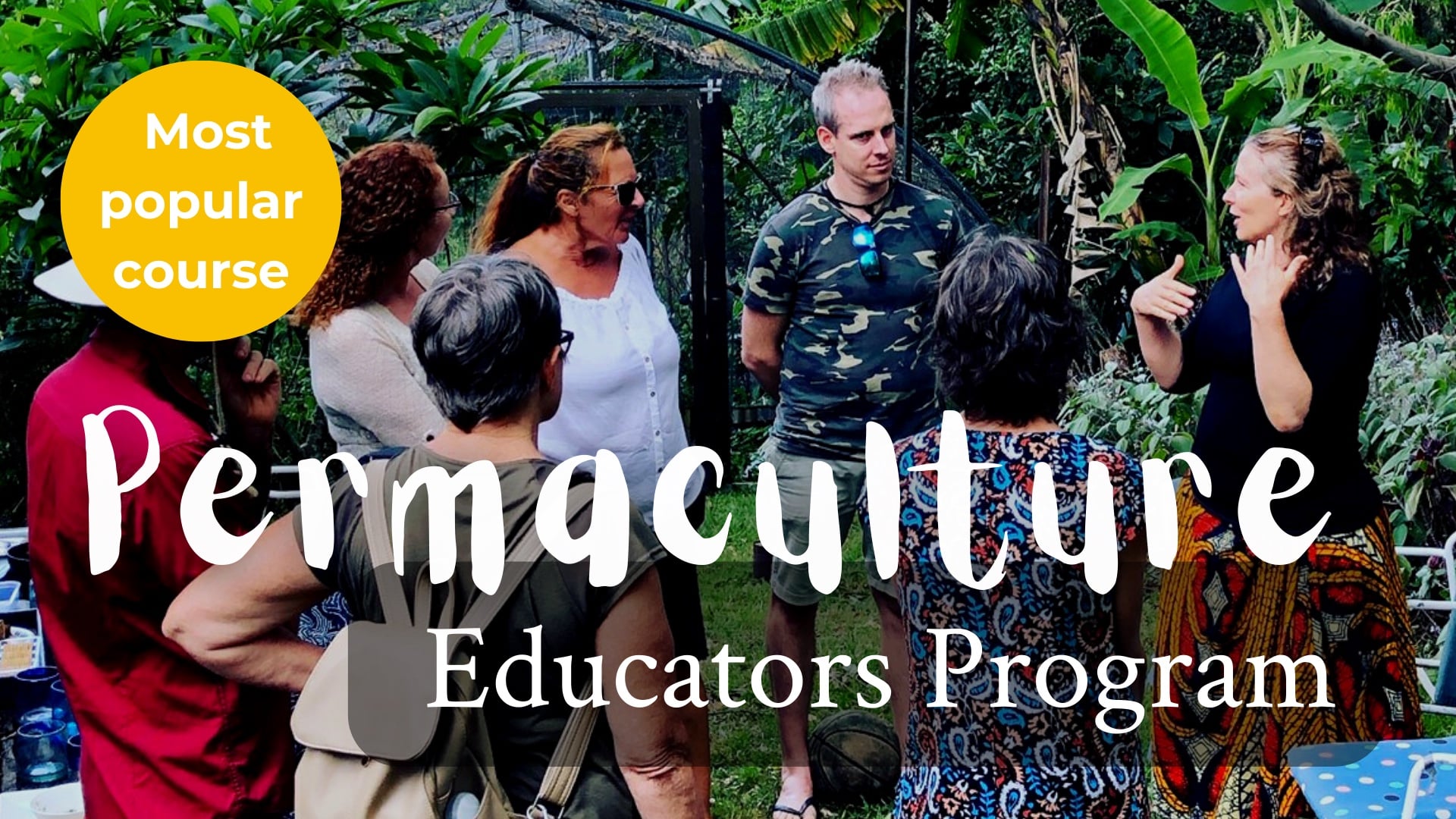
That is at the heart of our Permaculture Educators Program – supporting people to design regenerative systems and share what they know in their own places, in ways that are culturally grounded, community led and financially viable.
Listening to Abel, I hear the echo of so many of our graduates who have stepped into teaching, social enterprise and community leadership. If you are feeling that same call to work in service of land and community, you are warmly invited to explore the program and, if you like, book a time to chat with me about where your own permaculture path might lead.
You can listen to the full conversation with Abel on the Sense-Making in a Changing World podcast, and find out more about Glasbren at glasbren.org.uk.
🎧 Listen to Sense-Making in a Changing World wherever you get your podcasts.
Tune in on Spotify, Apple Podcasts, Youtube or any of your preferred podcast platforms.
Subscribe, share, comment and leave a ⭐⭐⭐⭐⭐ review if you enjoy and keep this podcast myceliating!
ABOUT THE PODCAST
The Sense-Making in a Changing World podcast is an initiative of the Permaculture Education Institute hosted by Morag Gamble. It is broadcast from a solar powered studio in the midst of a permaculture ecovillage food forest on beautiful Gubbi Gubbi country.
We explore ‘what now’ – what thinking do we need to navigate a positive and regenerative way forward; what does a thriving one-planet way of life look like; and where should we putting our energy.
ABOUT THE PERMACULTURE EDUCATION INSTITUTE
Morag Gamble, founder of the Permaculture Education Institute, is an award-winning permaculture teacher, humanitarian, writer, film-maker and designer who has led programs for 3 decades in over 22 countries. She is an international leader of the permaculture movement for change.
The Permaculture Education Institute works with people on six continents, teaching permaculture design and skills. how to be a permaculture teacher and community leader, and how to create a regenerative permaculture livelihood. You can start our courses today.
Visit our website to find out more.
Abridged Transcript: Morag and Abel
INTRODUCTION
Morag Gamble:
Hello, I am Morag Gamble and welcome to this episode of the Sense-Making in a Changing World podcast. Each week, I invite you to join me in conversation with leading permaculture related educators, thinkers, activists, authors, designers and practitioners to explore the kind of thinking and action we need to navigate a positive and regenerative way forward, to myceliate possibilities and share ideas of what a thriving one planet way of life could look like.
My guests offer voices of clarity and common sense.
In this episode I am joined by Abel Pearson, permaculture educator, community food grower and advocate, and co founder of the award winning Glasbren in rural Wales, dedicated to reconnection, regeneration, community and natural living. Abel and his family are the new caretakers of the incredible Lord’s Park Farm on the coast in west Wales, owned by the National Trust.
It is a new flagship project for the Trust that puts permaculture, regenerative farming and ecological restoration to the forefront. Here they are amplifying their community supported agriculture program, creating agroecological systems and teaching forest gardening, ecological design and permaculture – not as abstract ideas, but as ways of living in deep relationship with place, people and possibility. Their work is grounded in care: care for the land, for local community and for each other.
I had the great pleasure of visiting them last year in Wales with my daughter, Maya.
Before we begin, I would like to acknowledge that I am recording this episode on the unceded lands of the Jinibara and Gubbi Gubbi peoples here on the Sunshine Coast of Queensland, Australia, in my hand built solar powered studio surrounded by our permaculture garden, a place of daily learning, humility and gratitude.
This podcast is a project of the Permaculture Education Institute, where we support people around the world to design regenerative living systems, become teachers and leaders in their communities and to craft livelihoods rooted in care and connection. You can explore our programs at https://permacultureeducationinstitute.org and start anytime, or book a time to chat with me – there is a link down below in the show notes.
If you are enjoying the Sense-Making in a Changing World podcast, please subscribe, leave a review and share this episode widely. These conversations are made to ripple.
Well, let us now turn to my conversation with Abel Pearson of Glasbren.
CONVERSATION
Morag:
Thank you so much for joining me on the show today, Abel. It is such a pleasure to see you again. We worked out it is about a year since we were actually physically in the same place on your farm at Glasbren in Wales. Thank you for joining me.
Abel:
Absolute pleasure. Thank you for the invitation. Lovely to sit down with you and do this conversation.
Morag:
For those who have not heard of Glasbren or seen pictures of this gorgeous farm, can you paint a bit of a picture of where you are and what this place is?
Abel:
Glasbren is the Welsh language word for “sapling”, a young tree, symbol of regeneration, of young roots finding their place in the soil, and of being part of a forest ecosystem community. That is our symbol and what guides us.
We are a non profit community food and farming project based in southwest Carmarthenshire in Wales. We started on a much smaller site, three acres on the land that I grew up on, and then just over a year and a half ago we moved to a much larger farm which is on the cliffs above the Three Rivers estuary, where the Taf, the Tywi and the Gwendraeth rivers meet the sea in this incredible kind of crow’s foot feature on the Welsh landscape.
We are a community supported agriculture project, essentially exploring the role community facing farms can play in ecological regeneration, but also social regeneration, community building, and as hubs of community life and culture.
Morag:
You grew up in Wales, just down the road from where you are now.
Abel:
Yes, nine miles away from here. I remember coming to the beach here as a child and to the castle. All the features of this landscape that we are around every day now were a big part of my childhood.
We moved to Wales when I was nine, so I was very lucky to go into a first language Welsh primary school, to be given the Welsh language, and to grow up on a small farm.
Morag:
So you grew up farming. Your family was working the land.
Abel:
Not in the early years of my life, but it is something my parents found their way into. Then I was around cattle farming, vegetable growing, woodland management through my teenage years really, and even into adulthood.
I did a lot of WWOOFing and help exchange around the world – everything from small permaculture farms and natural building projects right through to sixty thousand acre mountain sheep stations – and then ended up on a land project in the north of Spain before I came back to Wales. So being involved in land work and farming has always been a big part of my life.
Morag:
Can you tell us what a “land project” is, because that has a particular meaning where you are?
Abel:
I use the term to differentiate from a farm. There are a lot of projects where farming is not necessarily the core activity.
The land project I mentioned was an incredible Dharma based land project retreat centre in the Catalan Pyrenees, where they were running retreats and courses for activists and people working in social and ecological justice to come and learn skills for resilience and to be more sustainable in their work.
Part of that was a larger vision that included building and tree planting and regeneration. It did include some farming and food production, but because its primary purpose was not as a farm, I guess that is how I draw that line.
Morag:
Where did permaculture come into this story for you?
Abel:
I think this is why it is so lovely to sit down and talk to you, because permaculture really is, maybe a phrase I do not use as much explicitly these days, but obviously it is underpinning and running through everything.
It is my origin. Everything that my life is now has come from permaculture, really.
It is hard to pinpoint exactly when I came across it, but through WWOOFing and things I think natural building was my entry point. I was really captured by natural building because suddenly I realised, oh, I can actually build my own house. I do not have to be a trained builder. I can use these really soft materials that are user friendly, where a group of people can get together and use them.
I did some amazing projects with Steve and Judy in New Zealand, who first introduced me to building with straw. They have a boot you can stay in that they built – you know, the old woman who lived in a shoe – a life size house in the shape of a boot.
They introduced me to natural building and through reading and inquiry around that I came across permaculture, and then that world just opened up. There are so many different aspects of permaculture living.
I went to this place in the north of Spain that I mentioned, Icodama, to do a permaculture, nature connection and deep ecology week with Alfred Decker. That was really the week that changed it all.
It brought together the practical interest I had in practical sustainability – natural building, growing my own food, homesteading – and this activist side, the side of me that wanted to be in service to the ecological crisis and what was going on in the world.
I had studied environmental history, so I was really interested in the history of our relationship with the land, the history of human existence on the land, how we have lived on it and how we have farmed it. Permaculture brought together this academic hunger and this practical interest, and opened my world to the outward facing possibilities of work on land.
So it did not need to be just about fulfilling my needs or my family’s needs from the land, but: how could a land project or a farm be applied to service to the community?
Morag:
I love the way you describe how it holds all of those different things. It is not necessarily about calling it permaculture, it is just there as threads that connect a whole series of ways of showing up, or a lens with which to see and communicate and bring different ideas together.
You are currently in the process of co designing the space you are on now. Can you tell us a little bit about how you are thinking about designing this 134 acre space? How are you using permaculture design on this common farm – and maybe describe a bit of the background of this National Trust farm and your role in stewarding it.
Abel:
Permaculture has been threaded through the way we have designed the project from the beginning. We are six years old now as a project.
This is the wonderful possibility of permaculture, and something I always talk about on courses: yes, we have used it in a very material way in the way we have designed our different growing spaces and now this farm, but almost more exciting is how it weaves into our organisational design.
How are we fulfilling those ethics of earth care, people care and fair share in the way we operate?
Over the years, particularly through the pandemic, that has manifested in terms of earth care in how we have grown the food. Our original site was a three acre, permanent, bio intensive food garden that produced vegetables but was also full of perennials, all designed on contour, with water catchment and soil building in mind.
People care came through our volunteer programs and feeding our members. Fair share was really key through the pandemic, when we had issues with food security, empty shelves and people losing their incomes overnight. We worked with other organisations to make the food accessible and as available as possible.
So over the years we have been asking: how are we living those ethics in practice?
That is the beauty of permaculture. It is a way of seeing. It is a guiding framework, really, and that is where it is really exciting for me.
Morag:
As an environmental historian exploring the cultural practices you have been immersed in, can you draw some connections with where permaculture helps to reconnect us to this deep knowing of how to be on country, grounded and place based?
Abel:
From my studies of environmental history, what arose was an understanding of how landscapes have been shaped by the nature of our relationship with them as humans, and the catastrophic effect of the loss of what you might think of as an indigenous relationship with, or a kinship with, or an interbeing with, the land that we live in.
If we look back to ancient indigenous food systems around the world – some of which still exist in certain places, many of which have been lost – they are these incredibly permacultural food systems. They integrate ecological regeneration with social good and feeding people, and they have been tweaked and evolved and adapted over many generations.
Each generation improves them to the point of almost perfection.
Sadly, that has largely been replaced and lost. Looking at the dawn of different agricultural advances and what impact that has had – drainage tools, tractors, the ways we changed our attitudes towards the land over time – that is something we are more and more interested in here.
It is not just sharing practical skills, not just teaching the how tos. It is more about giving people the opportunity to rediscover a sense of connection, kinship and understanding of, and listening to, the land.
For me, that is what I come back to with permaculture again and again. We tend to focus on the practical implementation, especially in terms of food growing, but a lot of those practices are indigenous systems we are trying to rediscover.
What has to underpin all of that is getting back to this way of understanding, connecting with, belonging in the land and being led from that place, from that spirit.
If we can integrate that in ourselves, then we can trust that any action we take practically and materially will come from a true place.
Morag:
It is very much about deeply falling in love with place, being in reciprocity, and building trust in a community and a neighbourhood. It is not just about me and my homestead. It is about building relationships so we all sustain one another.
I wanted to ask you about Welsh language and how that helps you see the space differently.
Abel:
The Welshness of this land and the Welsh language is a big part of that story. I am a second language Welsh speaker, so it will never be my fullest way of relating because I will never know what it is to connect to the land as a first language speaker. There is a grief there about that.
The Welsh landscape, Welsh agriculture and Welsh culture have evolved, or are intimately connected with, the language. The language itself is quite defined by agricultural heritage.
There is a great book I would recommend to everyone called Tir: Land, the Story of the Welsh Landscape by Carwyn Graves, where he explores the different words in Welsh for different parts of the landscape – words for moorland, different fields, places – that bring the landscape and our relationship with it to life.
One thing that really struck me from his work was about resistance to rewilding. Rewilding is contentious in the UK.
The Welsh word for culture is diwylliant, which if you break it down essentially means “unwilding”. The “di” is like the “un” part.
So literally the opposite of rewilding.
If you put yourself in the shoes of a first language Welsh speaker and you heard the word “rewilding”, it might be perceived as the opposite of culture, the removal of culture and the removal of people, history and heritage.
Suddenly you understand better why rewilding is not as simple as saying, this is great, let us just rewild.
Morag:
How are you finding your way into that conversation then, about bringing biodiversity back and embracing wildness and food and culture and supporting community as a whole?
Abel:
More and more for me the culture part is important, the social part, the part that understands our place as humans in the system, and the place of heritage and history.
There is a tendency sometimes to arrive in a place and impose ourselves and say, we have all the answers. We have permaculture and all these practices, and we know better, so we will supplant that onto what is here, because this is “just sheep farming”.
But I spent a lot of time with the tenant who was here before us on the farm. He was here fifty one years. To the casual observer he might seem like a typical farmer raising dairy cows, but the time I spent with him showed me he has an intimate connection with this land, an intimate knowing of the way the estuary defines the way he farmed here.
He talked about this push, the Morfa Berau – the boiling pool of the sea in the estuary that happens when the three rivers meet the sea – and it makes this rumbling sound which I have heard. They would use that as a sign that a storm was coming five days out.
It helped them decide when to cut hay, it helped them know what the weather was going to do. That kind of knowing is not something you can read or teach. It is just time.
Morag:
Time, deep listening, being deeply present and awake in place.
Part of what you are doing there is not necessarily teaching techniques, but how to step into that space, how to be present, how to notice, how to communicate noticings and step into that space of care.
I think a big part of what we need is to focus on becoming humankind – kind humans who are focusing on care and wellbeing and tending and connecting and listening in that deep time space.
Abel:
Yes, and I think Welshness and the Welsh language are primary here and really important, but they are not the only way to situate belonging.
Our volunteering community and the people who come to the farm – many are not Welsh speakers, many were not born in Wales. In every place in the world there are people who are not living where they were born, who are not living where they have bones of their ancestors in the ground, who maybe do not have the language as a first language.
So what does belonging and connecting to land look like if you do not have that framing?
What is a more local sense of belonging? It could be one hundred acres of this farm, or it could be one acre, or it could be that square metre that you go to every day.
I like this idea that through practice, through service, through food growing and farming, you are doing that work of belonging every day, because you are in practical practice every day with the land you live on.
Morag:
I really like that, being of a place. It is something we need to practise here in Australia in particular, because many of us are not from here.
I am probably a mix of Welsh and Scot and English and Irish, and several generations ago my family landed here. So I am not from this place, I am of this place.
There are so many people on the move – climate refugees, refugees from war, economic refugees. Being able to belong to a place, to connect and be of service, and find your way into a community through community projects like this is so important.
You have so many things at Glasbren – places where people can volunteer and find other people and start to feel a sense of belonging and purpose and being of service.
What are some of those volunteer roles that help people lean into this way of landing?
Abel:
Volunteering has always been a big part of the project since day one. We have a volunteer day every Thursday, and we always have.
We get a mix of people drawn to volunteering for many different reasons. For some people it is to learn food growing and practical land based sustainability skills. For many it is about connecting – being in a space with people of like heart and like mind, finding belonging in a community.
We always need more pillars of community that work for people and that are meaningful. The farm becomes that for people, a regular place you go where you know you will see the same people.
It is also a hopeful thing. It is a way of being in practical climate action for the earth in what can feel like a quite hopeless time. People find positive purpose and meaning in it.
For some people it is about mental health and wellbeing – the wellbeing benefits of being in nature, having your hands in the soil – and also the very real opportunity to get food in return, to get affordable, organically grown vegetables.
The big opportunity we have now at Lord’s Park is that we can offer many more different volunteering opportunities, not just related to veg growing but conservation and building.
This week the community are very active putting together a float for the local fiesta in the theme of the harvest. So there are lots of different volunteer opportunities here, and the possibilities are endless really.
Morag:
This idea of connecting through food and making good food affordable – I read somewhere on your website that 3 percent of the vegetables consumed in Wales come from Wales.
Abel:
Yes, that is true. It may be slightly more now.
I read a statistic this morning that one in one thousand fields in Wales is used for horticultural production, and it would only take one in fifty fields to provide five a day for every person. There are only three million people in Wales, so it would not take much.
Horticulture just has not been part of Welsh farming for a long time. It has never been supported by government agricultural schemes. That is a big part of it, which is changing now.
It is strange and sad. The older generation will say, I remember when every farm had veg growing going on.
Morag:
The subsidies or agricultural policy perhaps pushed people into monoculture – sheep or one product.
Abel:
Sheep and beef have been appropriate farming practices for much of the uplands of Wales, and a lot of that is understandable.
On the lowlands we have seen a massive move towards bigger and bigger dairy farms, intensification and industrialisation of dairy farming.
It has been a long time since we have seen horticultural production in a meaningful way. But that is changing, and Wales is quite an exciting place to be at the moment in that regard.
We have this amazing project called Welsh Veg into Schools, with partnerships between local councils, food distributors and food partnerships to get organic, locally grown vegetables into schools, hospitals and care homes. It was pioneered in Carmarthenshire actually, which is really exciting – we will hopefully be growing for that next year.
After a long time of there being a lack of vegetables around, there is suddenly this energy and drive to see more and more of that. It feels like a good time to be farming in Wales.
0 Comments