
ABOUT THIS EPISODE
Go Gently! Jade Miles with Morag Gamble on Local Food, Barefoot Gatherings & Learning to Belong Where You Are
What if the most radical thing you could do right now is go gently?
That is what this conversation left me with. Not a strategy, not a framework, not a list of actions — but this nugget of advice — an invitation. Go gently! Tend what is in front of you. Trust that your bones already know more than your head gives them credit for. Root yourself so deeply in the place you are that you can feel the seasons change in your body before the calendar tells you.
Jade Miles lives this — her philosophy and daily practice — in the soil, in the shadows, in the quality of light on a cold north east Victorian morning, in the women’s circles by the dam and the school groups sitting barefoot around fires and the 100 varieties of apple that fruit across six different months because someone paid close enough attention to plant them that way.
She is the kind of person who makes you feel, within minutes, that rootedness is not a retreat from the world. It is the most generative place from which to tend it.
About Jade
Jade is a local food advocate and educator, author, podcaster, and regenerative heritage fruit farmer at Black Barn Farm in north east Victoria on Palanggang Medang country. She is the CEO of Sustainable Table — supporting the regeneration of food and farming systems across Australia — and the author of Futuresteading and the newly released Huddle, a book about the quiet, necessary art of coming together in the places where we live.
She has spent 25 years watching the agricultural heartbeat of her region slow — close to 40 farming families dwindling to three in the time she has been there — and has been quietly, persistently rebuilding it through food cooperatives, farm education, women’s circles, barefoot gatherings, and an unshakeable belief that deep connection to place is the foundation of everything else.
What we explored in this conversation
We recorded this conversation late last year, not long after Jade had returned from a vision quest — raw, open, and freshly cracked open to what comes next. What came through was some of the most honest thinking I have heard about what local food actually does to a community, why the tools in our back pocket are never enough alone, and how to hold the urgency of our times without burning yourself out trying to carry it all.
Local food, and what it actually does to a community
Jade grew up in Gippsland as a permaculture kid — her father an eccentric artist who locked the doors to his studio and the house, leaving them to forage, climb trees, swim in rivers, and feed themselves from the land. She did not know until much later what a gift that was. That early formation shaped everything: the food cooperative she started in Beechworth, the farm education programs, the conviction that food systems change is community change — and that community change requires more than tools. It requires belonging.
Black Barn Farm is her response. Not a protest. A demonstration.
Tools in your back pocket, and why they are not enough alone
“Tools in our back pocket won’t be enough if we don’t also know how to collectivise them.”
This is the insight at the heart of Huddle — that deep collaboration, both with the human and the more-than-human, is where the real work lives. Not in strategic plans or advocacy halls, but in potluck dinners and barefoot gatherings and circles where everyone is heard.
Jade is not dismissive of individual action. She is expansive about it. She wants us to see that the thing we each bring — the skill, the story, the knowledge, the bit of magic — becomes exponentially more potent when it meets other people’s bits of magic. What ends up being the whole is significantly more effervescent than any one of us could produce alone.
Creating contexts for emergence, not just events
“The most effective events are always those steeped in someone’s genuine desire to hospitably open their heart, open their house, or open their garden.”
The most potent gatherings, Jade says, are always outside. Always barefoot. Always free or as close to free as possible. When she speaks — at a farm, in a woolshed, in someone’s garden — she turns the conversation back to the community: what does this look like here? What is your community’s language? Where can you support one another?
She makes school groups take their shoes off and sit on the ground. She lights fires. She makes sure everyone is heard — even if it is just one word. She has seen year 11 students arrive weirded out and leave saying: it feels really good here. It feels really normal. And she has seen some of those same students return years later as environmental educators, bringing their own school groups out to the farm.
You do not always see the seeds germinate. You sow anyway.
The vision quest, and what it opened
Jade had just returned from a multi-day quest with Katie Ridge from Nature Philosophy when we spoke. What emerged was an unexpected clarity — a willing acceptance of what she called burying the maiden. A ritualised death of one phase of life and an emergence into the next.
She came back knowing that her soul work is with women — helping them deeply reconnect and remember who they are and what they are here for, finding the voices to tell the stories that have for too long been shut down. She is still navigating what that means for the next chapter. But she knows it lives in the soil and in circle and in the body, not in the screen.
Whether what we are doing is enough
This is the question I carry. I suspect you carry it too. Jade carries it every day — to the point, she says, where you think you are going to turn yourself in knots.
“When that happens, I go to the bush and I let the noise become quiet.”
She has two sit spots — one by still water, one by running water — and she goes to whichever one the moment needs. She lets the noise become quiet. She redefines what enough looks like. She has compassion for herself. Because without that, she says, you are not in a generative way of being. You render yourself useless. You cannot do even what you are already doing.
And then: go gently. Even if only for the next hour.
A moment that stayed with me
Near the end of our conversation, Jade said something I have been sitting with ever since.
We can rewrite the separation story using knowledge that sits in our DNA. We do already have this knowledge. We know what it takes to live communally. We know what it takes to live in deep reciprocity with the land that holds us.
We already know. The knowledge is not lost. It has gone underground — suppressed by colonial systems, by fossil fuel abundance, by the proliferation of screens and strategies and KPIs. But it is in us. In our bones. Waiting to be remembered rather than learned.
That is what going gently makes space for. Not the absence of urgency. The presence of remembering.
Listen & watch
🎙️ Listen to the episode
▶️ Watch on YouTube
About Jade Miles
→ Black Barn Farm: blackbarnfarm.com.au
→ Sustainable Table: sustainabletable.org.au
→ Futuresteading podcast and books: futuresteading.com
→ Huddle — Jade’s new book
→ Instagram: @futuresteading
Go deeper with Morag
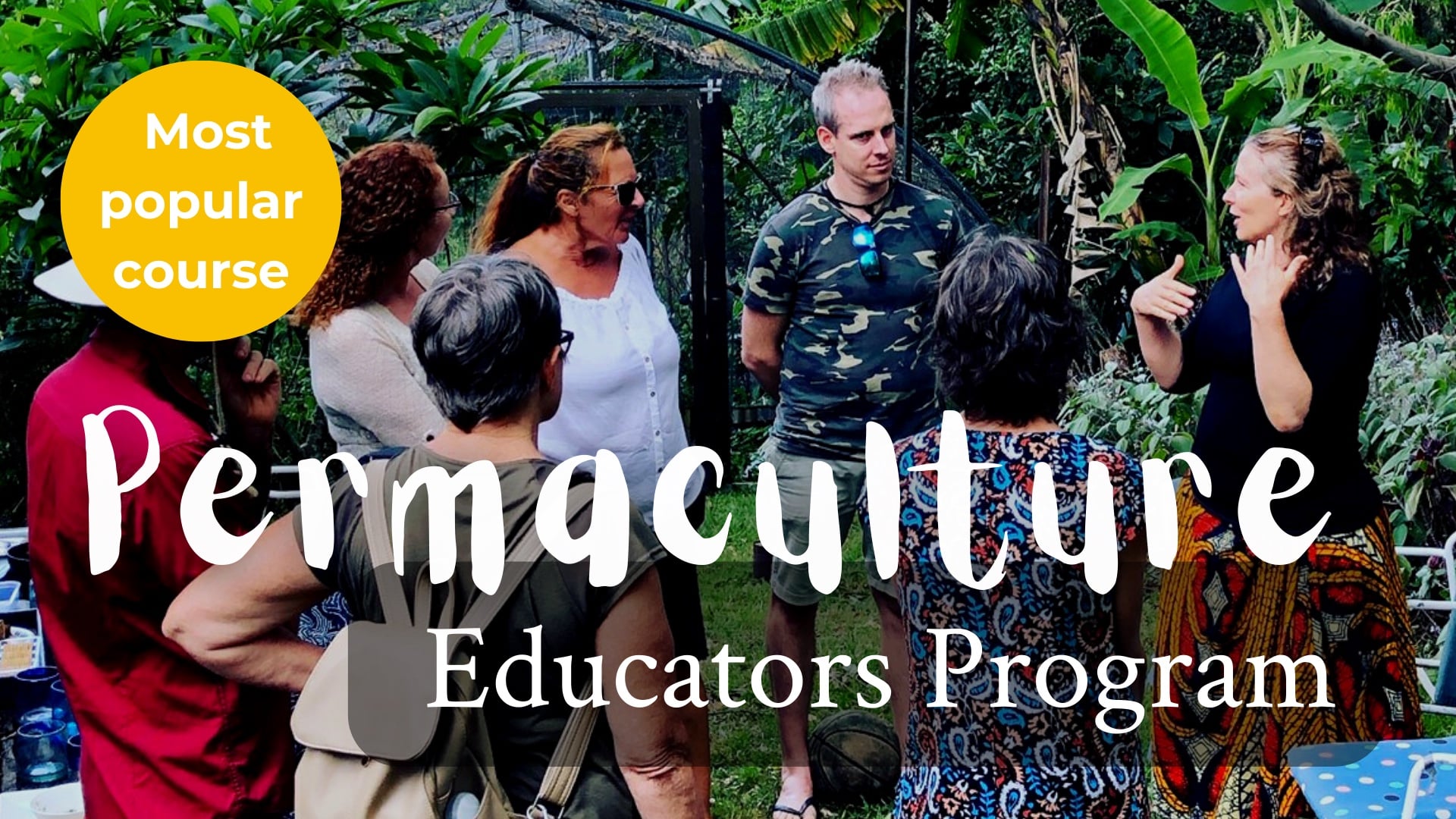
If this conversation has opened something and you feel called to learn permaculture design or to become someone who mentors and teaches it in your own community, visit the Permaculture Education Institute.
I record this podcast on Jinibara and Gubbi Gubbi country, south-east Queensland. I pay my deep respects to Elders past and present, and to all First Nations peoples — the original ecologists and the original permaculturalists, who have always known how to live in right relationship with Country. Always was, always will be.
🎧 Listen to Sense-Making in a Changing World wherever you get your podcasts.
Tune in on Spotify, Apple Podcasts, Youtube or any of your preferred podcast platforms.
Subscribe, share, comment and leave a ⭐⭐⭐⭐⭐ review if you enjoy and keep this podcast myceliating!
Watch the conversation on Youtube below.
ABOUT THIS PODCAST
The Sense-Making in a Changing World podcast is an initiative of the Permaculture Education Institute hosted by Morag Gamble. It is broadcast from a solar powered studio in the midst of a permaculture ecovillage food forest on beautiful Jinibara and Gubbi Gubbi country.
We explore ‘what now’ – what thinking do we need to navigate a positive and regenerative way forward; what does a thriving one-planet way of life look like; and where should we putting our energy.
ABOUT THE PERMACULTURE EDUCATION INSTITUTE
Morag Gamble, founder of the Permaculture Education Institute, is an award-winning permaculture teacher, humanitarian, writer, film-maker and designer who has led programs for 3 decades in over 22 countries. She is an international leader of the permaculture movement for change.
Through the Permaculture Education Institute, Morag works with people on six continents, teaching permaculture design and skills, how to be a permaculture teacher and community leader, and how to create a regenerative permaculture livelihood.
You can start our course today, and take as long as you need.
Visit our website to find out more.
0 Comments