
What is permaculture design and how can you use it in your daily life?
That question is at the heart of everything I teach in the Permaculture Educators Program — and it is the question that keeps bringing me back to the principles. Not as a checklist to memorise, but as a living system to inhabit.
The principles are not fixed. They are not finished. They are alive — rooted in the accumulated wisdom of decades of teachers, practitioners and thinkers, and still branching, still growing, still asking us to question them. That questioning is not a sign of weakness in the framework. It is the framework working exactly as it should.
Wilf Richards has spent three and a half years sitting with that. His new book, The Power of Permaculture Principles, written in deep collaboration with 40 permaculture educators across Britain and beyond, is the most honest and thorough exploration of the principles our movement has produced. Not a revision. Not a simplification. An invitation to think more carefully about the tools we already hold. [published by Permanent Publications]
About Wilf Richards
Wilf is a permaculture designer and teacher based near Durham in the UK. Since 2001 he has been co-managing a cooperative smallholding with friends — and the ongoing learning about land, community and systems is the ground his teaching grows from. He is a Senior Tutor in the British permaculture diploma system, a co-founder of Abundant Earth, The Land of Roots CIC and Green Durham CIC, and someone who came to permaculture through the road protest movement of the mid-1990s — that arc from anger at destruction to the desire to build something generative instead.
What we explored in this conversation
Where the principles actually came from
Wilf traced the history carefully — through Bill Mollison, David Holmgren, and the more than 40 permaculture teachers who have written about the principles in their own ways over the decades. What he found was not one set of principles but families of principles — branches of a larger tree, each expressing something true, often overlapping, sometimes in tension. The edge chapter alone draws on six or seven teachers who have named and shaped that principle differently across the years.
The language, and where it still needs to evolve
One of the most honest threads in our conversation was about language — where the wording of some principles still carries the ghost of the extractive thinking permaculture is trying to move beyond. The word use, for instance. We use resources. We use elements. Wilf was candid that this conversation came to him a little late in the writing process, and that a second edition will carry it further. The book ends with an explicit invitation to keep questioning — because the principles should reflect the values they ask us to live by.
What’s missing: resilience
Wilf argues that resilience deserves its own explicit principle — not because it is absent from permaculture thinking, but because if a word is not in the list, it tends to slip from view. Other principles gesture toward resilience. But unless we name it directly, we risk designing around it rather than for it.
The principles as a pattern language
One of the unexpected insights Wilf arrived at through the writing process: the principles are a pattern language. Not the specific applications — those are particular stories, particular places, particular people. The principles are what is transferable. The underlying reasons why a design decision works, the template that can be lifted from one context and applied in another with entirely different ingredients. Take them as recipes, not as photographs of someone else’s garden.
Becoming Indigenous again
The thread that runs deepest through this conversation is this: the principles are a way of helping us become more indigenous ourselves — to find our way back into being nature, not just living alongside it. That is a stepping stone, not the destination. But for many people, particularly those whose ancestral connections to place have been severed or buried, it is a place to begin.
The principles as a living system
Wilf’s hope for the book is a cultural shift — not just in how we understand the principles, but in how we be with them. That the tools themselves embody the values they describe: diversity, integration, adaptation, resilience. The principles, in other words, living by their own teaching.
About Wilf Richards
→ The book: The Power of Permaculture Principles
→ Linktree: linktr.ee/wilf.richards
→ Substack: The Permaculture Attitude
→ Email for signed copies or workshop enquiries: [email protected]
Go deeper with Morag
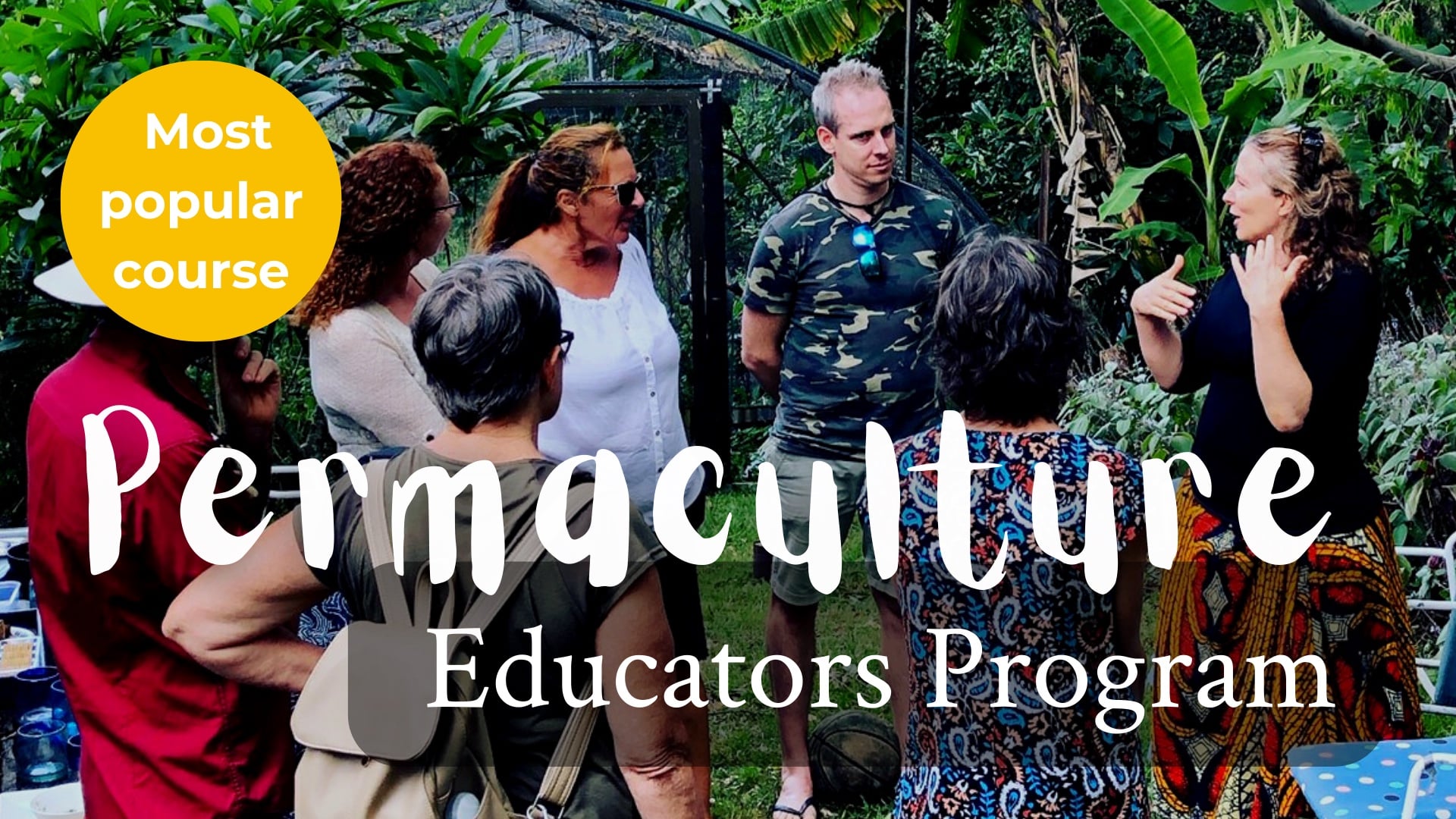
If you feel called to learn permaculture design — or to become someone who teaches and mentors it in your own community — visit the Permaculture Educators Program at the Permaculture Education Institute. Morag has been teaching permaculture for over 30 years around the world, and would love you to join her. You can start anytime, and take as long as you need with Morag as your mentor.
🎧 Listen to Sense-Making in a Changing World wherever you get your podcasts.
Tune in on Spotify, Apple Podcasts, Youtube or any of your preferred podcast platforms.
Subscribe, share, comment and leave a ⭐⭐⭐⭐⭐ review if you enjoy and keep this podcast myceliating!
Watch the conversation on Youtube below.
ABOUT THIS PODCAST
The Sense-Making in a Changing World podcast is an initiative of the Permaculture Education Institute hosted by Morag Gamble. It is broadcast from a solar powered studio in the midst of a permaculture ecovillage food forest on beautiful Jinibara and Gubbi Gubbi country.
We explore ‘what now’ – what thinking do we need to navigate a positive and regenerative way forward; what does a thriving one-planet way of life look like; and where should we putting our energy.
ABOUT THE PERMACULTURE EDUCATION INSTITUTE
Morag Gamble, founder of the Permaculture Education Institute, is an award-winning permaculture teacher, humanitarian, writer, film-maker and designer who has led programs for 3 decades in over 22 countries. She is an international leader of the permaculture movement for change.
Through the Permaculture Education Institute, Morag works with people on six continents, teaching permaculture design and skills, how to be a permaculture teacher and community leader, and how to create a regenerative permaculture livelihood.
You can start our course today, and take as long as you need.
Visit our website to find out more.



0 Comments