
“Joy. Ninety-four percent of people said they garden because it brings them joy.” – Hannah Moloney
In this Sense-Making in a Changing World conversation, I speak with Hannah Moloney, presenter on ABC Gardening Australia, permaculture educator and designer, climate activist, cabaret performer and author of the newly released Why We Garden: On the Joy and Wonder of Growing Things Even When We Don’t Have To.
Joy is the thread that runs through everything Hannah does — and through this conversation. When she surveyed thousands of people for her book, asking why they garden, 94% gave the same answer: joy. Not food security. Not climate resilience. Not saving money. Joy.
That is not a trivial finding. It is, I think, one of the most important things we can know about our relationship with the living world right now.
“People will go to extraordinary lengths to have a garden. Sometimes it’s irrational. It costs all their time, sometimes lots of their money. And that says so much about humanity — that we seek out, almost in desperation, that connection to earth.”
That hunger shows up across cultures, income levels and circumstances — from refugees rebuilding life, to people with chronic illness who can barely leave the house, to some of Australia’s most recognisable public figures. All of them, in the end, saying the same thing: I have to garden.
Why this conversation matters
Joy is where we began, and joy is where we kept returning — but this is far from a light conversation. Hannah goes deep.
She wove her own very personal stories through this book alongside voices from thousands of survey respondents and Australian icons including Bruce Pascoe, Tim Winton, Bob Brown, Claire Bowditch, Costa Georgiadis and Laura Tingle. What emerged is a portrait of gardening as one of the most fundamentally human acts available to us — not a pastime, but a practice of belonging.
“It’s a reminding. You don’t have to learn anything new. It’s already in you. Just remember — this is where you belong, and this is what keeps us alive.”
We talked about the garden as a place of healing — how tending living things moves grief and heartbreak through the body in ways that are hard to explain and impossible to deny. I shared my own story of retreating to a garden at nineteen during one of the hardest periods of my life, finding that it held space for everything I was carrying — rage, tenderness, confusion, and eventually, something lighter. Hannah spoke of producing her best vegetable gardens in times of extreme grief — the external tinkering and the internal tinkering happening as one and the same thing.
We explored what the English language doesn’t quite have words for: that deep sense of knowing, ease and belonging that comes from being in relationship with place. The garden as threshold into the felt understanding that we are not separate from nature — we are nature. We are the garden itself.
“We hear about this in First Nations cultures across the world. And we all come from First Nations cultures. Some of us are just a bit more disconnected. But we all have that connection. We just maybe have to remember it.”
And joy — it turns out — is the door back in.
Key ideas from this episode
- Joy is the primary driver. Ninety-four percent of people garden for joy. That is a compass for how we invite more people into regenerative ways of living — meet them where the joy already is.
- The garden heals. Tending living things moves grief, rage and heartbreak through the body. The external tinkering and the internal tinkering are not different things.
- We are the garden. We breathe the air of the plants, we compost back. We are participants in a living system, not managers of something separate.
- Every garden is meaningful. From a pot on a balcony to a paddock, the birds will come, the insects will come. You do not have to leave the city to have a real relationship with the living world.
- Urban green space could be so much more. Seventy to seventy-five percent of green space in cities is lawn. Natives, edibles, habitat corridors and water-holding landscapes are already being demonstrated — and are not complicated.
- Gardening is ancient activism. From the Diggers of 1640s England to guerrilla gardeners in 1970s New York to today, the hunger to belong to land and tend it collectively is perpetually being rediscovered.
- Art opens hearts. Hannah’s climate justice cabaret Time Rebel, her upcoming 350km walk across Tasmania dressed as an Azure Kingfisher — these are not departures from her work. They are extensions of it. Art reaches what expertise alone cannot.
- The practivist life. Showing up in service of life — in whatever form that takes in your world — is the work. Not because it is comfortable, but because more voices are needed.
Joy is not an escape from the work. It is the work.
When we get our hands in the earth, we remember something that no amount of screen time, data or urgency can give us: we belong here. This is what keeps us alive. And tending that — together — is one of the most quietly radical acts available to us right now.
This is a rich, warm and life-affirming conversation with one of Australia’s most joyful and purposeful practivists. I hope it sends you straight outside.
Find out more about Hannah Moloney and her work:
→ The book: Why We Garden: on the joy and wonder of growing things, even when we don’t have to
→ Website
Get into Permaculture design & education with Morag
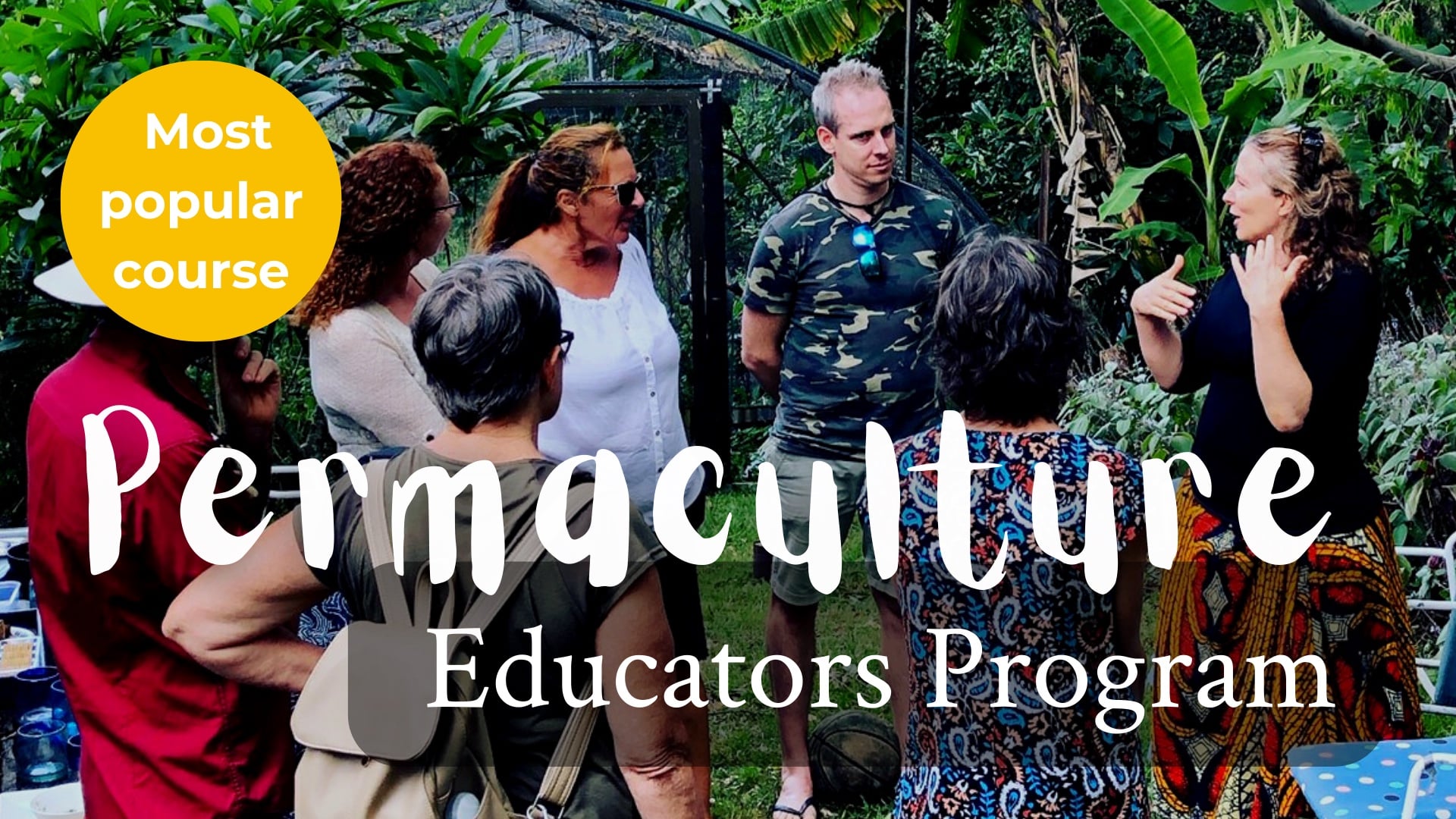
If you feel called to learn permaculture design — or to become someone who teaches and mentors it in your own community — visit the Permaculture Educators Program at the Permaculture Education Institute. Morag has been teaching permaculture for over 30 years around the world, and would love you to join her. You can start anytime, and take as long as you need with Morag as your mentor.
🎧 Listen to Sense-Making in a Changing World wherever you get your podcasts.
Tune in on Spotify, Apple Podcasts, Youtube or any of your preferred podcast platforms.
Subscribe, share, comment and leave a ⭐⭐⭐⭐⭐ review if you enjoy and keep this podcast myceliating!
Listen link at top of page, and you can watch the conversation on Youtube below.
ABOUT THIS PODCAST
The Sense-Making in a Changing World podcast is an initiative of the Permaculture Education Institute hosted by Morag Gamble. It is broadcast from a solar powered studio in the midst of a permaculture ecovillage food forest on beautiful Jinibara and Gubbi Gubbi country.
We explore ‘what now’ – what thinking do we need to navigate a positive and regenerative way forward; what does a thriving one-planet way of life look like; and where should we putting our energy.
ABOUT THE PERMACULTURE EDUCATION INSTITUTE
Morag Gamble, founder of the Permaculture Education Institute, is an award-winning permaculture teacher, humanitarian, writer, film-maker and designer who has led programs for 3 decades in over 22 countries. She is an international leader of the permaculture movement for change.
Through the Permaculture Education Institute, Morag works with people on six continents, teaching permaculture design and skills, how to be a permaculture teacher and community leader, and how to create a regenerative permaculture livelihood.
You can start our course today, and take as long as you need.
Visit our website to find out more.



0 Comments