
In this episode
- Anna Matilda, The Urban Nanna, author of Everyday Permaculture: Sustainable Living for Every Space, shares how permaculture can be lived in any space and any circumstance.
- How a basket of foraged apples on a Melbourne footpath grew into a community corner and a deep sense of security.
- Gifting what’s excess to our needs, and storing our abundance in other people.
- Guilt as a compass, picking one thing that’s too easy, and growing before you can see the fruit.
- Bringing nanna skills, crafts and relational learning into libraries, councils and schools.
My guest today is Anna Matilda, also known as The Urban Nanna. Anna is a permaculture educator, speaker and author of Everyday Permaculture: Sustainable Living for Every Space, beautifully illustrated by Brenna Quinlan. She runs workshops across Melbourne in libraries, schools and through councils, and has a regular feature on ABC Radio National.
Anna’s mum is Swedish, and Anna grew up with allemansrätten, everyone’s right to roam, and lagom, the culture of the middle way. So when she found permaculture after years as a primary school teacher and vice principal, it felt like coming home. As she puts it, this is how she had been living her whole life.
This was the first time Anna and I had spoken, though our paths have been circling one another in the permaculture world for years. Within minutes it felt like we’d been friends for ages, and we kept talking well past our usual time.
“You don’t need a composting toilet and a goat to do permaculture. You can do it wherever you’re at.”
Can you practise permaculture without land?
So many people feel drawn to permaculture and then hesitate. It can seem like something that needs land, time and a homestead. Anna lives it from wherever she is. For the past 15 months she has been living with her parents, caring for them as they move into aged care. Before that, she was a renter living alone in Melbourne through some of the longest lockdowns in the world.
It was during those lockdowns that something shifted. Every time a lockdown was announced, the shops sold out of toilet paper, and every six weeks Anna’s subscription box arrived with more than she needed. So she put some out the front. She also had 20 kilos of foraged apples ripening on the dining table, and was too worried about work to cook with them. Into a basket on the footpath they went, with a sign and a recipe. That small act grew into a community corner, and into the deepest sense of security she has ever felt.
“I may be houseless at the moment, but I will never be unhoused.”
Anna also speaks openly about being autistic. As a teacher, her area of further study was autism, at a time when girls were rarely diagnosed because the tests had been built around boys. Years later, a large Scandinavian study changed that understanding, and she recognised herself. She now sees the strong pattern recognition that comes with her autism as a gift for permaculture design, and for spotting mushrooms under a carpet of pine needles.
“Oh, good. I wasn’t broken all those years. I wasn’t damaged. I wasn’t less than.”
What is everyday permaculture?
Everyday permaculture is permaculture lived in the life you already have, with the home, time and capacity you have right now. In Anna’s words, permaculture is a systems-based framework for living more ethically and sustainably, based on your life and your capacity. Her book, Everyday Permaculture: Sustainable Living for Every Space, brings this thinking into whatever space you call home, through food, gifting, crafts and community.
Key ideas from this episode
Permaculture as a framework you shape to your life. Anna describes the 12 principles as loose guides towards the ethics of earth care, people care and fair share. They’re broad on purpose, so each of us can find what fits our own life and capacity. She goes more on vibes than words, and when she does reach for words, permaculture is a systems-based framework for living more ethically and sustainably, based on your life and your capacity.
Why it feels like a homecoming. Many cultures are built on small groups working together for the good of all. Anna sees people everywhere reaching for that village feeling again, through food heritage, growing and handcrafts.
Guilt as a compass. Anna asks people what they feel most guilty about when it comes to sustainability, and then to sit with it for a while before changing anything. Guilt is an old signal that we’ve stepped outside what’s good for the tribe, and a decision that grows from listening to it tends to stick.
Pick one thing that’s too easy. Do it until you’re bored of it. By then it’s part of your everyday, and you’re ready for the next step. Big change grows from lots of small, sustained ones.
Growing before you can see the fruit. An apple tree grows for years before it bears viable seed. Anna’s image sits beautifully beside the idea of myceliation I often come back to on this podcast: we keep putting out our leaves and our fine threads, trusting they connect to something larger.
I store it in other people. Anna borrows this from Terry Pratchett’s witches. Sharing what’s excess to our needs plants goodwill, and care only grows. It just shifts where it lives.
Giving without conditions. When Anna worried about one person taking everything from her community corner, conversations with Deldint Fleming, Brenna Quinlan and Tanya van der Wit helped her let go. She now spends $15 a week on extra groceries for the corner, whoever takes them.
Stuff holds value, and costs us to keep. If you won’t use something in the next six to 12 months, you may be paying rent for it to sit in a box. Giving it away stacks functions: it eases your housing needs and supports someone else.
Reclaiming the crafts. Anna taught herself carving and weaving in her childhood treehouse, and now teaches these crafts in schools. We share our very different memories of school Home Ec, and talk about the word “witchy” and the long history of labelling women who know plants and land.
Learning as relationship. Nanna skills were passed on around the kitchen table by someone who knew us and our household. Anna brings this relational way of teaching into libraries and schools, and sees inquiry-based and self-directed learning, especially Kath Murdoch’s model, as fertile ground for permaculture thinking in mainstream education.
Starting right where you are. Anna’s parting suggestion: walk into one room, find one thing you won’t need for a while, and think about who could use it. Someone you know, a local group, the library. In a few minutes you’ve practised gifting, seen the embodied value in your things, lightened what your home has to hold, and explored an open question.
I loved this conversation. Anna brings permaculture to people in such beautifully accessible ways, wherever they live and whatever their circumstances. I hope it leaves you looking around your own home and neighbourhood with fresh eyes, and perhaps filling a basket with something to share.
About Anna Matilda, The Urban Nanna
Anna Matilda is a Melbourne-based permaculture educator, speaker and author of Everyday Permaculture: Sustainable Living for Every Space, illustrated by Brenna Quinlan. A former primary school teacher and vice principal, she runs workshops in libraries, schools and through councils, and has a regular feature on ABC Radio National. As The Urban Nanna, she shares recipes, nanna skills and simple, joyful ways to live sustainably wherever you are.
Find out more about Anna Matilda and her work
- The Urban Nanna: recipes, blog articles, free council events and a shop
- Everyday Permaculture: Sustainable Living for Every Space: available in good bookshops and libraries. If your library doesn’t have it, ask your librarian to get it in.
- The Urban Nanna on Instagram: @theurbannanna
Everyday permaculture: frequently asked questions
Do you need land to practise permaculture?
You can practise permaculture wherever you live. As Anna says, “You can do it wherever you’re at.” A renter, an apartment dweller or someone living with family can apply permaculture thinking to food, possessions, energy, time and community, starting with one small, sustainable change.
What is a simple first step into everyday permaculture?
Anna suggests walking into one room, finding one thing you won’t need for a while, and thinking about who could use it. In a few minutes you practise gifting, recognise the value held in your things, and lighten what your home has to hold.
Where can I find Anna Matilda’s book?
Everyday Permaculture: Sustainable Living for Every Space is available through Anna’s website, in good bookshops and in libraries. If your library doesn’t have it, ask your librarian to get it in.
Where can I learn permaculture with Morag Gamble?
At the Permaculture Education Institute I mentor and guide people from all over the world. You can start growing food at home with The Incredible Edible Garden, deepen into design with the Permaculture Design Certificate, or share permaculture with others through the Permaculture Educators Program.
Keep exploring everyday permaculture with me
Anna shows how permaculture can live in any space, from a balcony pot to a library shelf to a kitchen table. If this conversation has sparked something in you, here are three ways to keep exploring with me at the Permaculture Education Institute, wherever you are and whatever space you have.
The Incredible Edible Garden is my gentle, practical online course for growing food at home. Like Anna, I believe everyone can take part, whether you’re on a balcony, renting, or tending a backyard. Six core lessons and three bonus modules guide you through living soil, abundant planting and a garden that nourishes you and the life around you. Beginners and experienced gardeners are equally welcome. Start The Incredible Edible Garden
If Anna’s work sharing permaculture through libraries, councils and schools speaks to you, the Permaculture Educators Program is where we explore that path together. You earn your internationally recognised Permaculture Design Certificate and Permaculture Teacher Certificate at the same time, with lifetime access, and join HIVE, our warm global community of permaculture educators, with live sessions throughout the year. Together we explore how to design, how to share design with others, and how to grow a livelihood from this work. Explore the Permaculture Educators Program
Anna’s book is about permaculture for every space. The Permaculture Design Certificate is where that thinking deepens into design: for your garden, your home, your community and your life. It’s an internationally recognised qualification you can begin online the moment you enrol, with 26 modules and a global permaculture community to learn alongside. Begin your Permaculture Design Certificate
More conversations you might enjoy
- Permaculture Living with Kirsten Bradley: simple, joyful ways to weave permaculture into home life
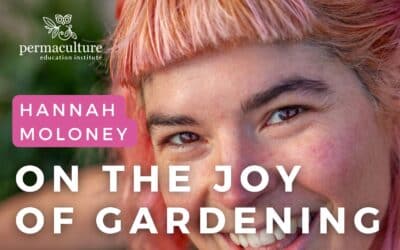
- On the joy of gardening with Hannah Moloney: what draws us to the garden, even with a full life and a small balcony
- Feed us with Trees with Elspeth Hay: seeing the forest around us as a food garden
About Morag Gamble
Morag Gamble is a permaculture educator and practitioner with more than 30 years of experience, and founder of the Permaculture Education Institute. She has taught in 22 countries across six continents, co-founded Northey Street City Farm in Brisbane, and lives and works in a hand-built, solar-powered home and studio at Crystal Waters permaculture ecovillage on Jinibara and Gubbi Gubbi Country in southeast Queensland. She hosts the Sense-Making in a Changing World podcast and the Our Permaculture Life YouTube channel.
This podcast is created by MORAG GAMBLE, Founder, Permaculture Education Institute
- Morag’s Courses
- Podcast Blog
- Podcast on YouTube
- Podcast Instagram
I am a possibilitarian and I believe in HumanKINDness.
In this podcast my guests and I explore How are we to live? Really live, as nature ourselves, tending the conditions where life can thrive. We ask How do we become the kind of humans this moment is asking us to be?
This podcast is one of my acts of myceliation. Each conversation is a thread in a vast network of people speaking up for life with love and care.
This podcast beams out from my hand-built solar-powered studio in the midst of a permaculture food forest in a permaculture ecovillage on Jinibara and Gubbi Gubbi country.
If this episode lights something in you, pass it to one person who needs it. That is how myceliation works.

0 Comments